
 EN
Quick Links

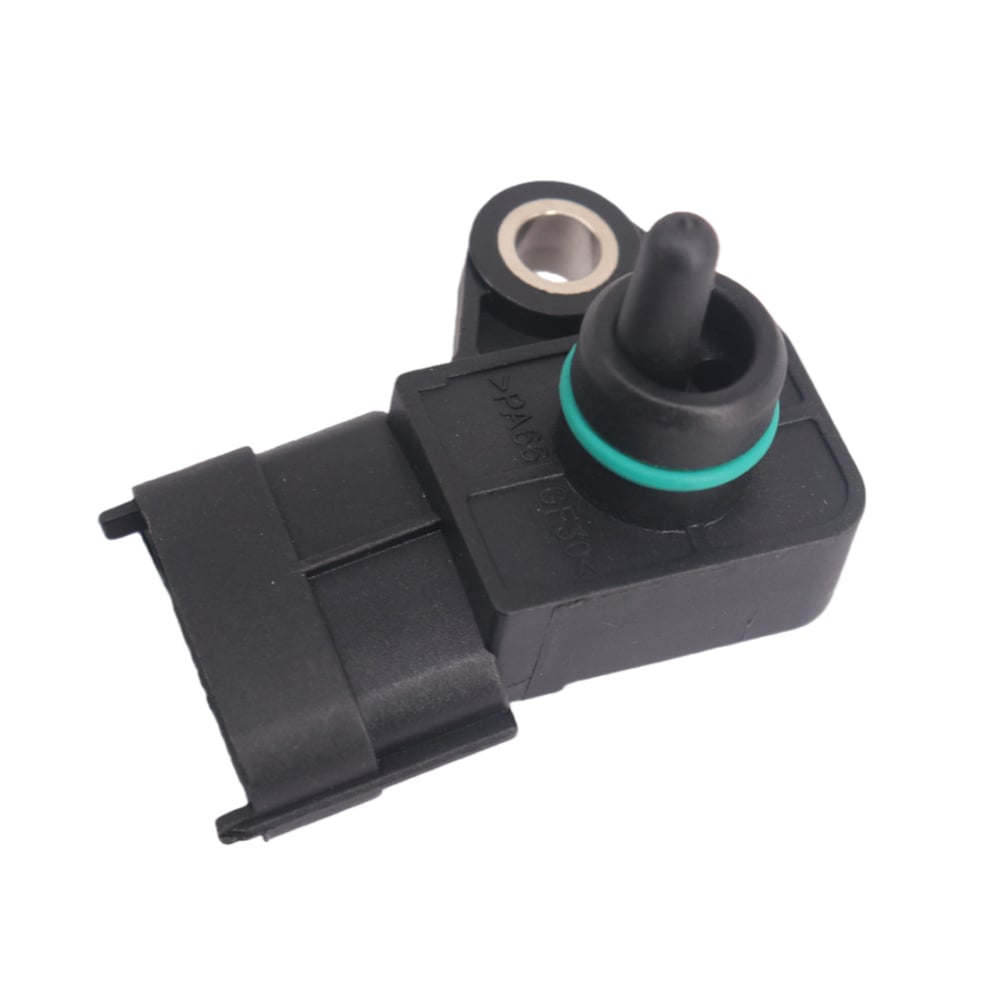
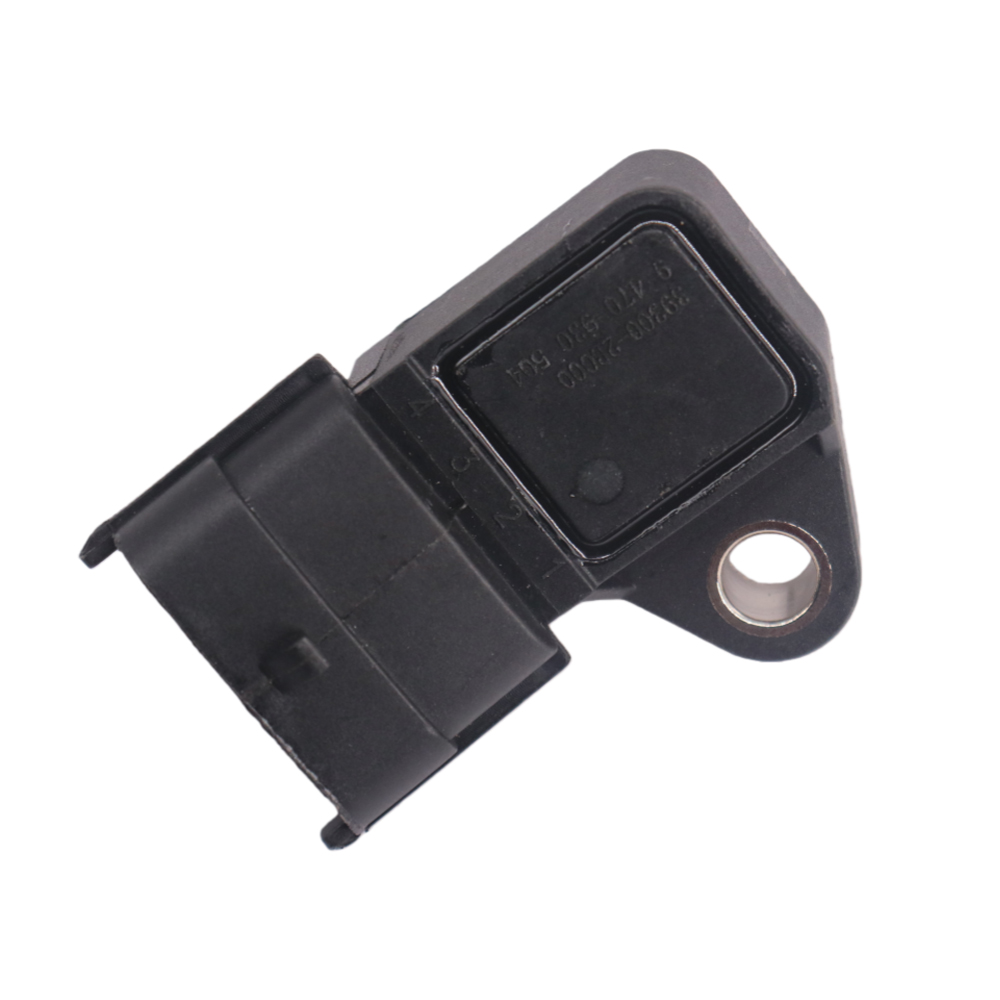
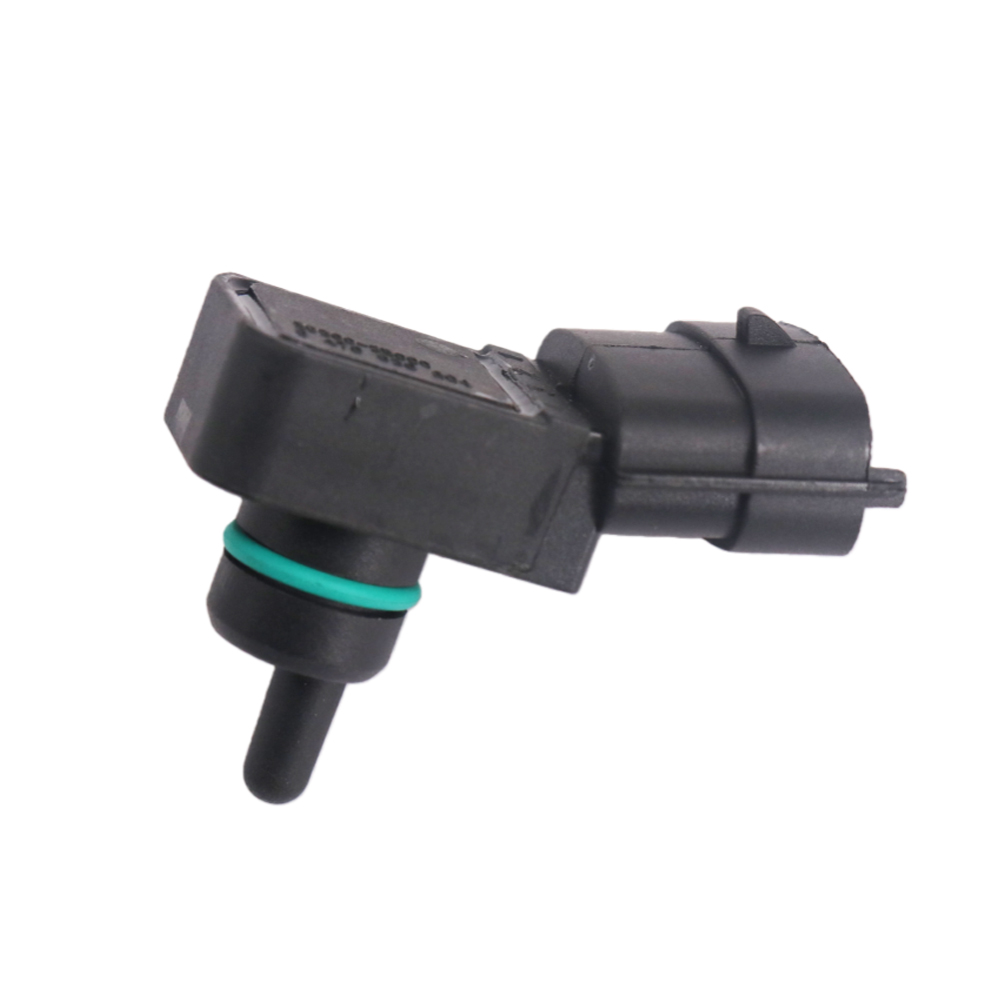
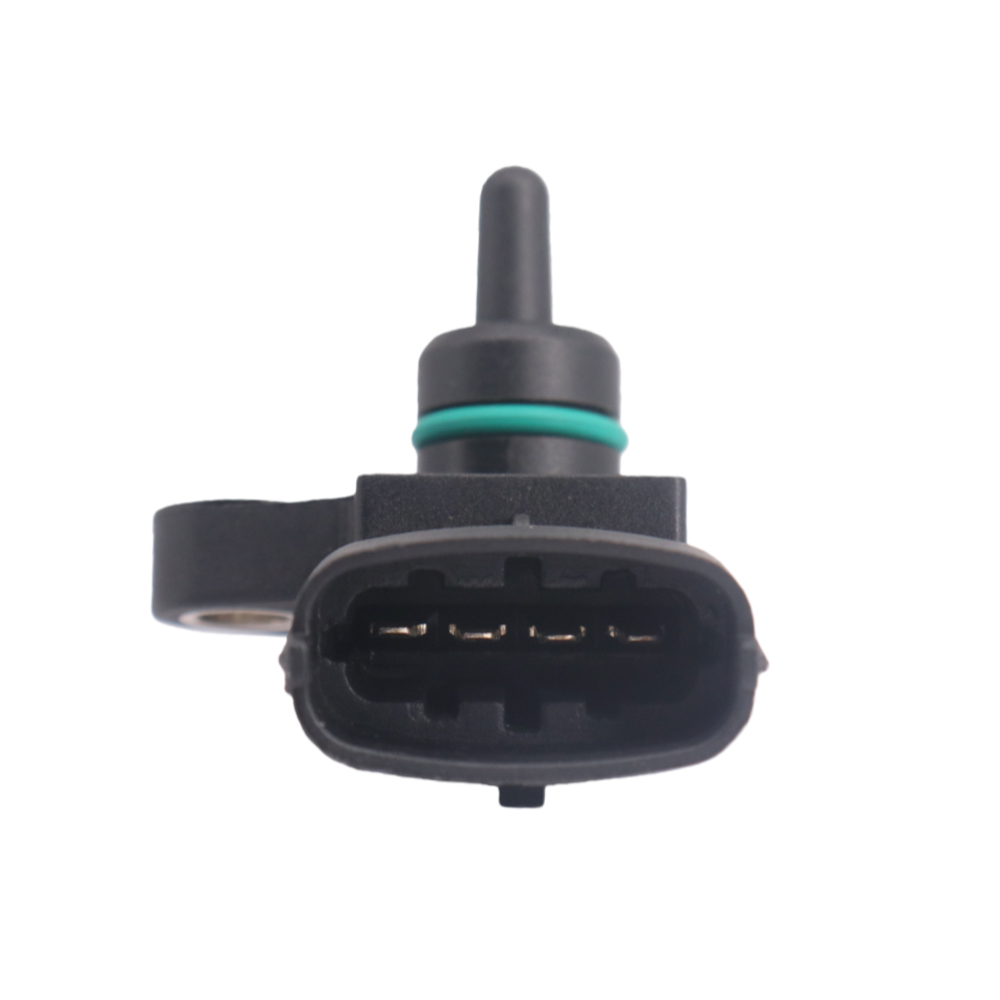
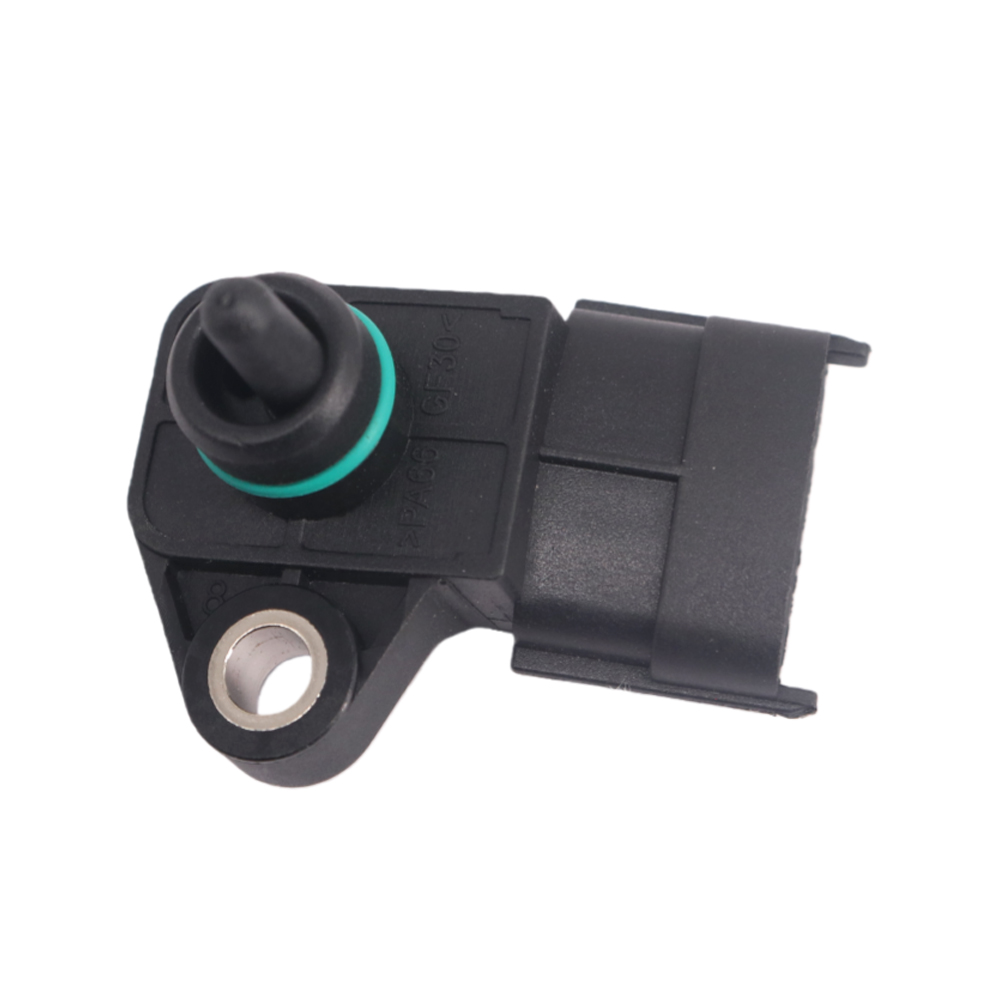
Most pressure sensors only ever see vacuum. On a turbocharged Sonata or K5 this one also reads pressure above atmosphere — and a part that has to be right in both directions fails in ways a naturally aspirated car never shows you.
Wholesale, fifty pieces per order. Distributor pricing applies at that quantity.
Reads boost, not just vacuum
● — 50 to 400 kPa absolute.
Four-pin
● analog output, 5V ± 0.25V, ±1.5% FS.
Crosses 39300-2B000, 39300-2B100, 9022010006.
● Sonata, K5, Optima.
● 20.7 g
● washer in the bag, IP67, ISO 9001.
Derate, not drift
● is what a turbo car does when this part lies — section 7.
Type |
Absolute pressure sensor (MAP) |
Range |
50–400 kPa absolute |
Reads |
Vacuum and positive pressure |
Output |
Analog voltage |
Connector |
4-pin |
Supply |
5V ± 0.25V |
Accuracy |
±1.5% FS |
Temperature |
−40 to +125 °C |
Ingress |
IP67 |
Net weight |
20.7 g |
Wholesale from |
50 pcs |
Application |
Notes |
Hyundai Sonata |
Four-pin connector; match the number removed |
Kia K5 |
Four-pin connector; match the number removed |
Kia Optima |
Four-pin connector; match the number removed |
Three numbers, three applications: 39300-2B000, 39300-2B100 and 9022010006. We list them as catalogued and add no year column, since none came with this part.
One note for the trade: the same body style was sold with more than one engine, and not all of them are turbocharged. Confirm the number off the old unit rather than the badge on the boot lid, and confirm whether the car in front of you is the forced-induction version before you discuss boost behaviour with its owner.
Diagnosing this part on a naturally aspirated engine and on a turbocharged one are two different jobs, because the failure modes present differently.
Here is what a turbo car does when the reading is wrong. It protects itself. Depending on the calibration, a pressure signal that is missing, implausible or inconsistent with the throttle will produce a torque limit, a boost ceiling, a limp-home map or a cut at a specified load. The driver experiences a car that will not pull, not a car that runs slightly rich — and the dashboard may or may not say anything.
So the symptom is a power complaint, not a fuel complaint. That sends many owners toward the turbo, the wastegate actuator, the intercooler or the boost solenoid, all of which are more expensive than this sensor and none of which are guilty as often.
Four things worth comparing before you condemn anything.
Commanded versus actual boost.
1. Most modern controllers log both. If commanded and actual track each other but the car is still slow, the sensor is not the fault and neither is the turbo — look at the torque limit that is actually cutting in.
The reading at key-on, engine off.
2. It must equal atmospheric for your altitude. A boost sensor that is offset at rest is offset everywhere, and that single number is free.
Behaviour across the boost threshold.
3. A signal that is correct below 100 kPa and goes flat, jumps or sticks above it is failing only where it matters.
Stored codes for overboost and underboost.
4. Both can be produced by a lazy sensor and by a stuck wastegate. Only the live comparison in point 1 separates them.
And one that is not a test. A pressure sensor that "reads something" on a scan tool proves nothing under boost, where the whole difficulty lives.
Field |
Value |
Brand |
RUNTONG |
Part number |
RB-PS014 |
OEM cross-reference |
39300-2B000 · 39300-2B100 · 9022010006 |
Type |
Intake manifold absolute pressure sensor |
Pressure range |
50–400 kPa absolute |
Reads |
Vacuum and positive pressure |
Output |
Analog voltage |
Connector |
4-pin |
Supply voltage |
5V ± 0.25V |
Accuracy |
±1.5% FS |
Operating temperature |
−40 to +125 °C |
Ingress protection |
IP67 |
Housing material |
ABS plastic |
Net weight |
20.7 g |
Supplied with |
Sensor and washer |
Inner packing |
Zip bag |
Carton size |
6.5 × 6 × 5 cm |
Certification |
ISO 9001 |
Warranty |
12 months |
Wholesale minimum |
50 pcs |
Custom printed carton |
From 1,000 pcs |
Dispatch |
7 days from stock; 15–30 days for a production lot |
Freight |
Air, sea, or land |
One sensor and one washer in a zip bag, bag in a neutral carton of 6.5 × 6 × 5 cm. Twenty and a half grams over a hundred units is still a postal parcel.
What the carton must not do is imply an origin it does not have. No vehicle manufacturer's mark, no logo, no wording that suggests a factory part. For a distributor selling into chains that audit their suppliers, a plain box with our own branding on it is a cleaner answer than a box designed to be mistaken for something else.
Handle by the body, not by the connector. The shell is the most fragile feature on any sensor this size, and it is the feature a customer judges first when he opens the bag.
Custom cartons from 1,000 pieces, one design, approved before production.
Half an hour, and the one step people skip is the one that matters most on a turbo car.
1. Battery negative off. Let the controller go to sleep — a turbo car stores more than one fault if you unplug while it is awake.
Record the key-on, engine-off pressure value first.
2. On this application it is the reference that tells you, later, whether the new part sits where the old one did.
3. Release the connector latch, pull straight. The plug is often in a hot, tight place; press the tab deliberately rather than working it loose.
4. One screw or clip, sensor out, port covered immediately.
5. New washer, sensor square to the face, snug only. Plastic flange against aluminium.
6. Plug in until it latches, tug to confirm, and route the loom clear of the exhaust side — heat is what ages the shell and the wire behind it.
7. Key on, engine off: the value should match step 2. Then idle, then a road test that actually reaches boost, because a fault that only appears above atmospheric pressure will not show up in a workshop yard.
8. Do not clear the codes until the boost test has been repeated once. A single clear-and-hope is how a real fault becomes an intermittent one.
Dispatch. Seven days from stock; three to four weeks when the batch is produced.
Freight. Air, sea or land. Consolidate the order — for goods at this unit value, the customs entry is the line that hurts.
Tax. Duty and VAT with the buyer unless DDP is agreed in writing. We declare one classification and it stays with the shipment.
Warranty. Twelve months against defects in manufacture, batch-wide, covering the sensor and its seal. Not covered: a broken connector latch, a cracked flange, an installation without the washer, or a sensor condemned for a boost fault that turned out to be a sticking wastegate — a mistake this page exists to make less likely.
No. The same number serves naturally aspirated applications too, where it only ever reads vacuum. The boost behaviour in sections 4, 5 and 7 applies to the forced-induction versions.
Four. Confirm against the plug on the car.
50 to 400 kPa absolute — about half a bar of vacuum at the bottom and roughly two bar of boost above atmosphere at the top.
Possibly. A signal that is offset but plausible produces a derate rather than a code. Section 7 lists the four comparisons that settle it.
A sensor with a narrower span will clip under boost and read "no fault" while doing it. The span is on the datasheet for a reason.
We publish four pins, 5V supply, analog output and the range. We have not been given a terminal-by-terminal assignment and will not invent one.
Fifty is the wholesale minimum. A single sample at full price is the sensible first order.
From 1,000 pieces, single design, proof approved first.
Honda NCW50 NSC110 PCX125 PCX150 37700-K27-V01 Motorcycle Crankshaft Position Sensor
240mm Front Brake Disc Honda CG Titan Fan 125 150
Honda BIZ 125 Throttle Body — 16400-KSS-C02, 22 mm
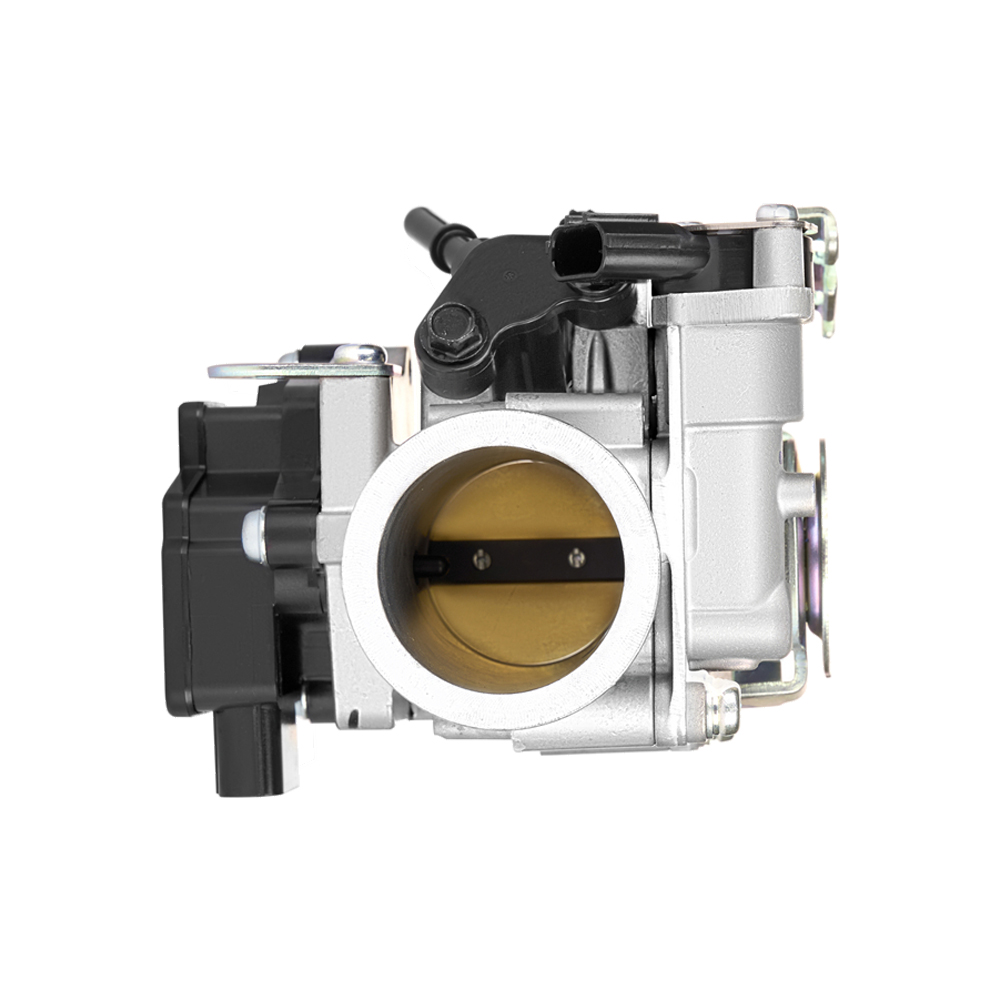
34 mm Racing Throttle Body for the Honda CB 250 Twister — 16400-K31-901