
 EN
Quick Links

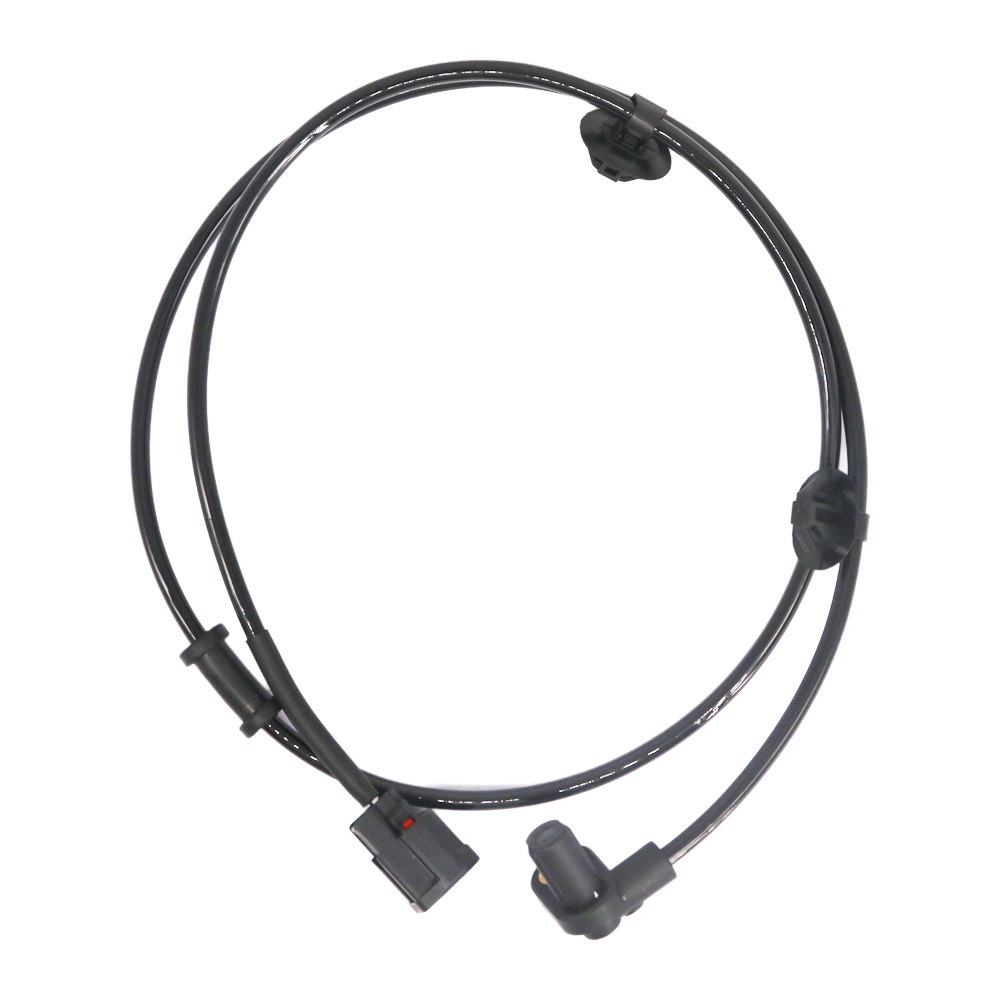
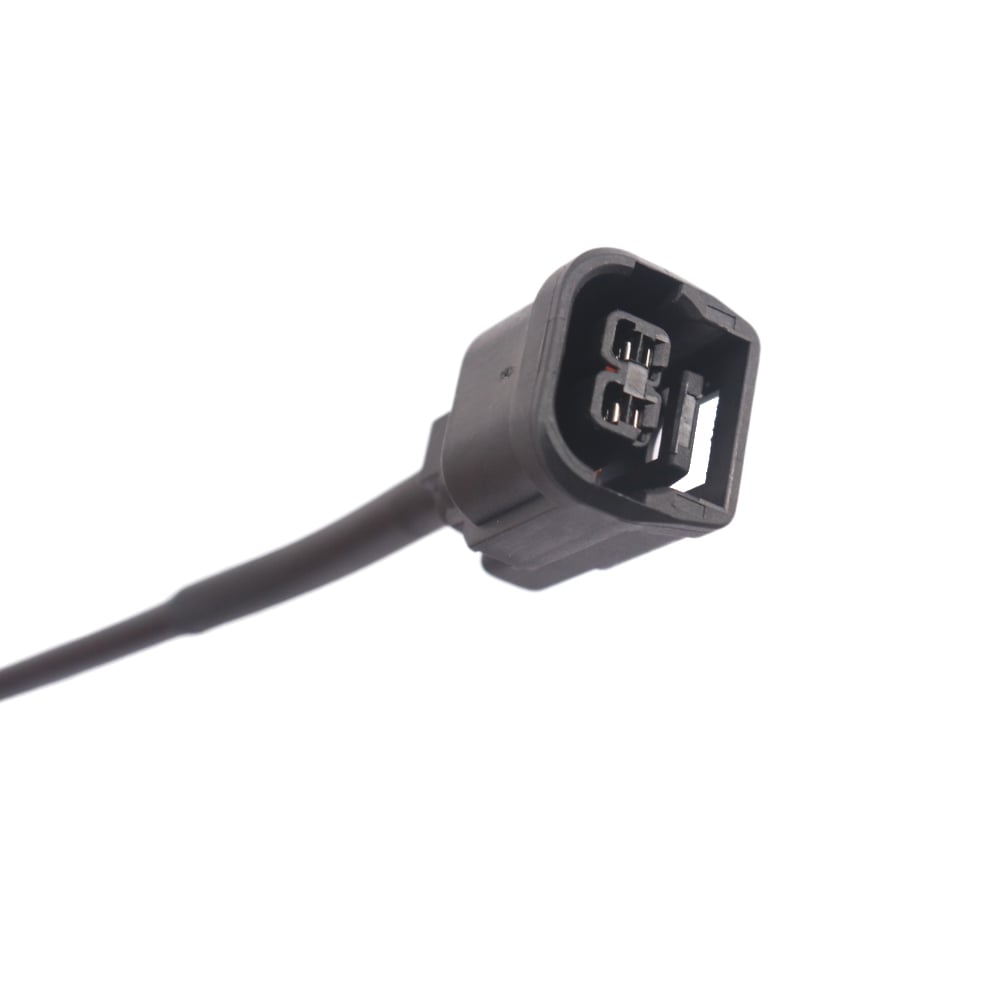
Type |
Wheel speed sensor, front |
Principle |
Active Hall |
Output |
Square wave or current pulse |
Position |
Front wheel |
Tone ring |
Not included |
Model |
NSP190 |
Temperature |
−40 to +150 °C |
Ingress |
IP67 |
Weight |
41 g |
Wholesale from |
100 pcs |
Wear parts fail on a schedule. Brake pads, belts, tyres — you can look at a parc, look at the mileage, and predict what a shelf needs. This part does not work that way.
It fails when something happens to it. A low-speed drop on the left, a kerb taken badly, a fork leg removed and laid down on the sensor, a tyre lever used as a lever, a wheel refitted with the sensor still hanging by its lead. None of that is mileage-dependent, and none of it appears in a service schedule.
So the demand is spiky and it is not regional. A workshop that does three of these in a week may do none for two months. The customer is not shopping on price and is rarely shopping in advance: the bike is off the road, and it is off the road today.
That changes the stocking logic. With a wear part you stock to forecast; with this you stock to lead time. A hundred in a carton is not a forecast — it is the decision that the next unplanned drop does not wait three weeks for a part that costs less than the labour to fit it.
And the model is young, which cuts both ways: fewer machines in the parc today, and a growing number every month, with most of them still inside the period when an owner repairs rather than replaces.
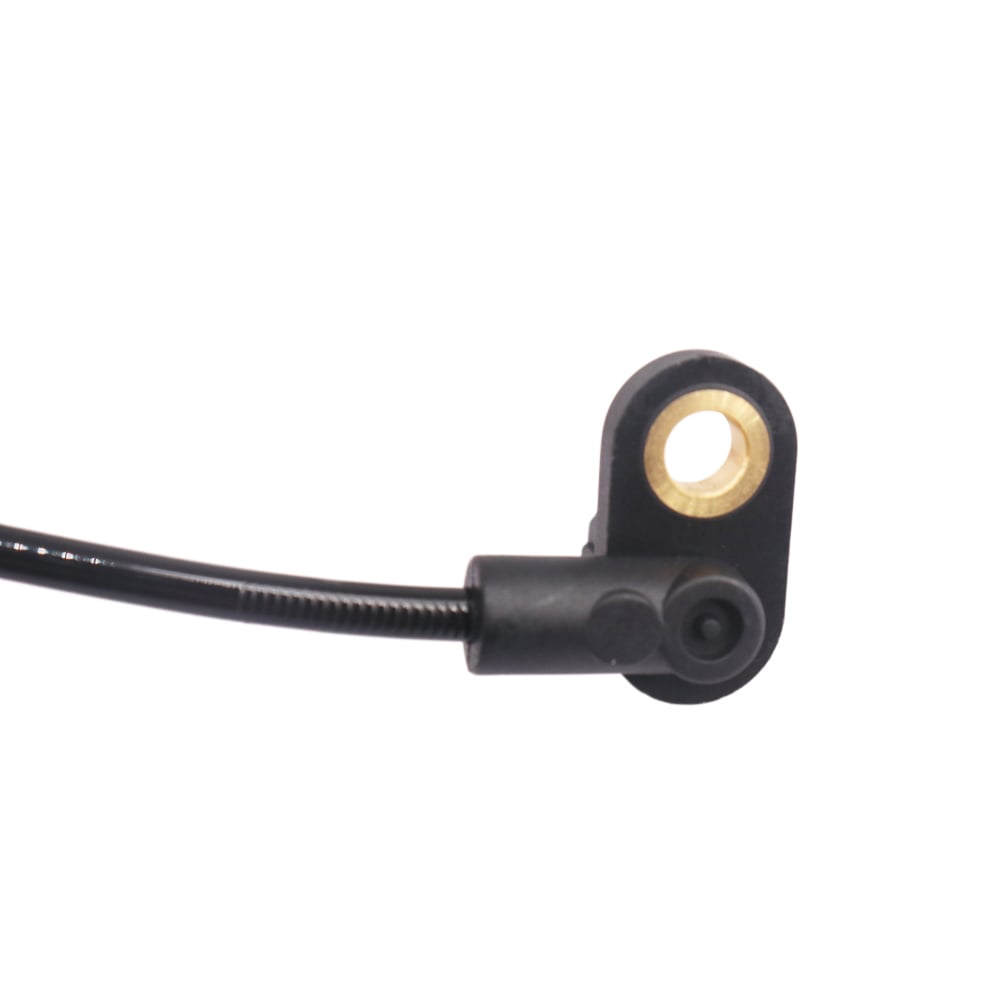
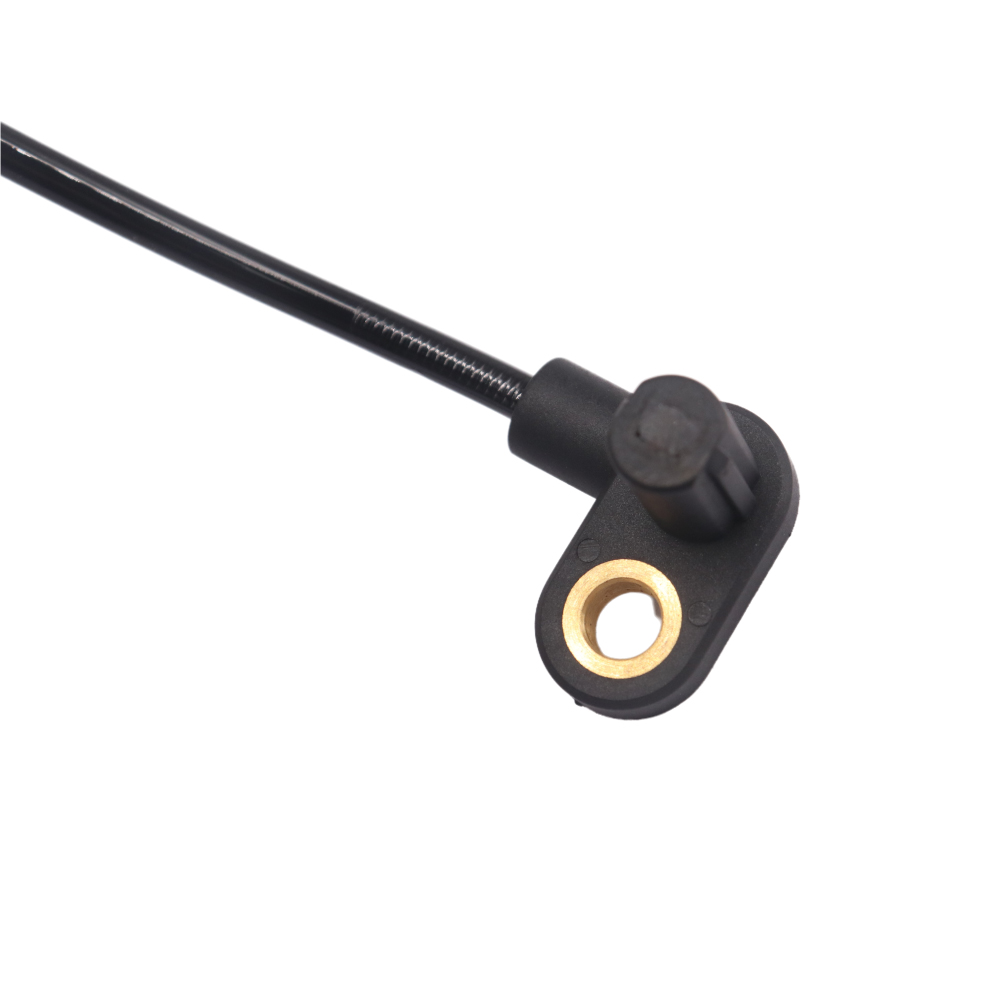
The sensor face. It sits behind the fork leg pointing at the ring, which makes it the lowest hard object on that side. A slide scrapes the face; the question is whether it scraped the plastic or the potting behind it.
The bracket. It is a thin pressing and it takes the first contact. A bracket bent by five degrees moves the reading, and the owner then buys a sensor that was never the problem.
The lead. It runs down the fork, past the caliper, and into a plug that lives under the mudguard where water and grit collect. In a fall it gets trapped between the fork and the ground, and the insulation survives while the copper inside does not — the failure appears days later, as an intermittent lamp.
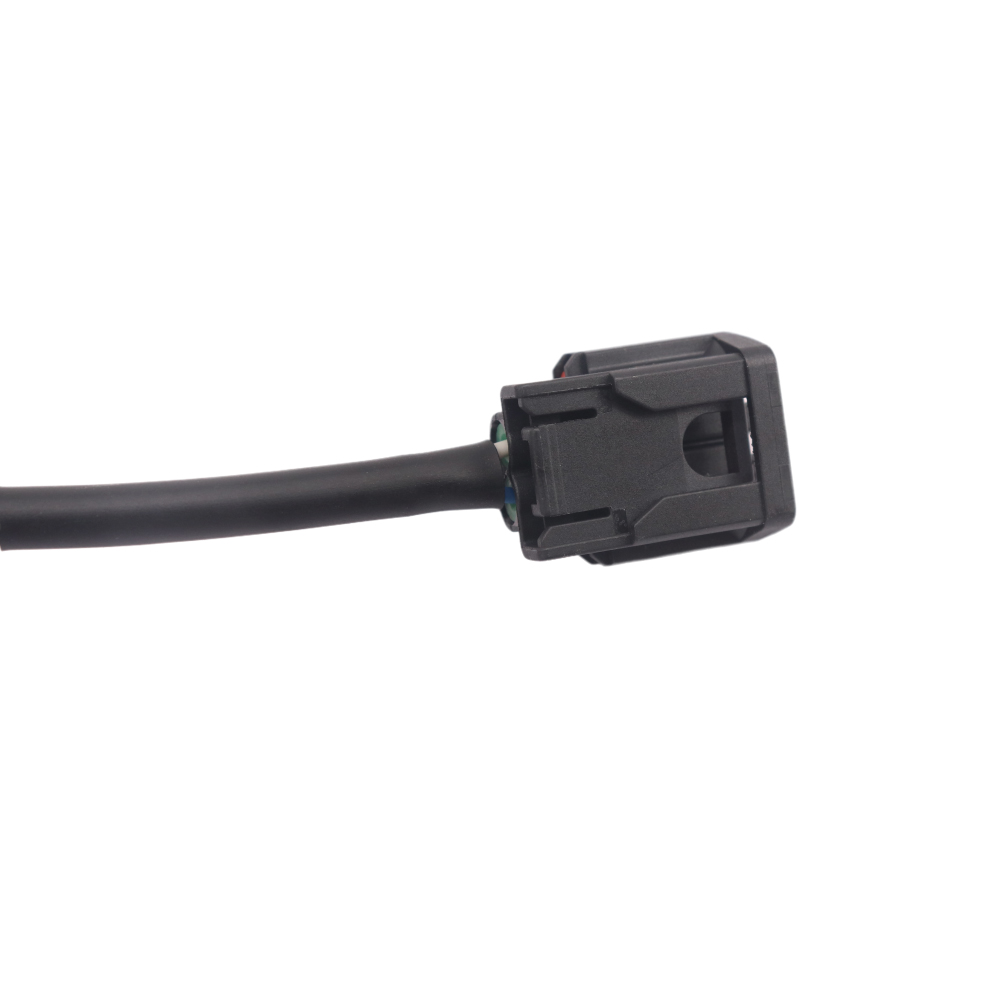
The plug. The latch is small and the plug is exposed. A plug that has been apart and not fully latched will work in the workshop and drop out on the first wet ride.
Which is why the diagnosis starts with the eyes. In this application the evidence of what happened is usually visible before any meter is connected.
Model |
Honda NSP190 |
One model only. No other Honda, and no other displacement, is claimed here. If a listing suggests this number fits a family of Hondas, ask for the number off the part rather than the model name.
Front wheel. The rear sensor is a different part.
Tone ring not included.
OEM cross-reference: 38520-2HH-A01-M1.
On a front sensor that arrived after an incident, the physical inspection answers more than the electrical test in most cases.
Look at the face. Light scuffing on the plastic is cosmetic. A face that has been ground until the potting shows, or that has a crack radiating from the tip, is finished — no meter reading changes that.
Look at the bracket. Sight along it against the fork leg. A bracket that is not parallel to the ring's plane has moved the gap, and a new sensor on a bent bracket will read badly in exactly the way the old one did.
Flex the lead, gently, along its whole run. A lead with a broken core feels and reads normally until it is moved. If the lamp can be made to flicker by moving the lead, the lead is the fault — and on this part the lead is not separable from the sensor.
Check the plug. Latch intact, pins bright, no green. A plug that has been underwater or left unlatched produces the same complaint as a failed sensor.
Then meter it. Ignition on, wheel spun: an active sensor should report from walking pace. If the reading is clean and the lamp is still on, the fault is upstream — wiring, module, or a stored code that needs clearing after the repair.
And when you hand it over, spin the wheel once with the customer watching the speedo. It takes ten seconds and it prevents the return visit that happens when a lamp stays on because nobody cleared the code.
Field |
Value |
Brand |
RUNTONG |
Part number |
RB-ABS004 |
OEM cross-reference |
38520-2HH-A01-M1 |
Type |
ABS wheel speed sensor |
Position |
Front wheel |
Principle |
Active Hall |
Output |
Square wave or current pulse |
Tone ring |
Not included |
Mounting |
Original fixing points, direct replacement |
Operating temperature |
−40 to +150 °C |
Ingress protection |
IP67 |
Housing |
ABS plastic |
Weight |
41 g |
Supplied with |
Sensor and washer |
Inner packing |
Zip bag |
Carton |
6.5 × 6 × 5 cm, 100 pcs |
Certification |
ISO 9001 |
Warranty |
12 months |
Wholesale minimum |
100 pcs |
Custom printed carton |
From 1,000 pcs |
Dispatch |
7 days from stock; 15–30 days to build |
Freight |
Air, sea, land |
Bagged with its washer, then a plain carton of 6.5 × 6 × 5 cm, one hundred to the box.
41 g, and the plug is the vulnerable end. It ships with the lead coiled loose and the connector protected — this is a part that usually arrives after a fall, and a second impact in transit is a poor start.
The washer travels with the sensor in the bag. It sets the seating depth against the bracket, and on a front sensor the seating depth is half the reading.
Plain cartons, no marque. A hundred to the carton suits a workshop buying four and a distributor selling singles. Printed from 1,000 pieces, one design, proof approved before printing.
1. Ignition off. Photograph the lead's route down the fork and behind the caliper before anything moves.
2. Release the connector latch. Never pull the lead to unplug it — on this part the lead and the sensor are one piece.
3. One fixing bolt: out fully, body withdrawn straight out of its seat.
4. Clean the face and the ring, and check the bracket is straight and parallel before fitting anything new.
5. Fit the washer, seat the body flat, torque to the machine's figure.
Do not add washers to close a gap
and do not bend the bracket back with the sensor bolted to it.
6. Route the lead exactly as photographed: behind the fork leg, clear of the disc and the caliper, clipped where it was clipped.
7. Ignition on, spin the wheel, watch the reading move. Then ride, and confirm the lamp goes out or the stored code clears.
No. It fails from impact, fork work, tyre changes and lead damage far more often than from mileage.
Only the NSP190 is claimed here. Confirm with the number off the part you are removing.
Front. The rear is a different part number.
No. The ring stays on the machine.
Not necessarily. Check the bracket, the face and the lead first — three of the four usual outcomes of a drop are not a failed sensor.
A hundred is the wholesale minimum. For one machine, buy a single unit at retail and keep the box.
Honda NCW50 NSC110 PCX125 PCX150 37700-K27-V01 Motorcycle Crankshaft Position Sensor
Yamaha YZF-R125 YZF-R3 R15 MT125 220mm Motorcycle Rear Brake Disc Plate
Yamaha MIO M3 125 GT125 FINO 125 Motorcycle Scooter TPS Throttle Position Sensor
Bare Throttle Body for the Honda Wave 125i / XRM 125 Fi / RS 125 / Future 125 / Dash 125 — 24 to 32 mm