
 EN
EN
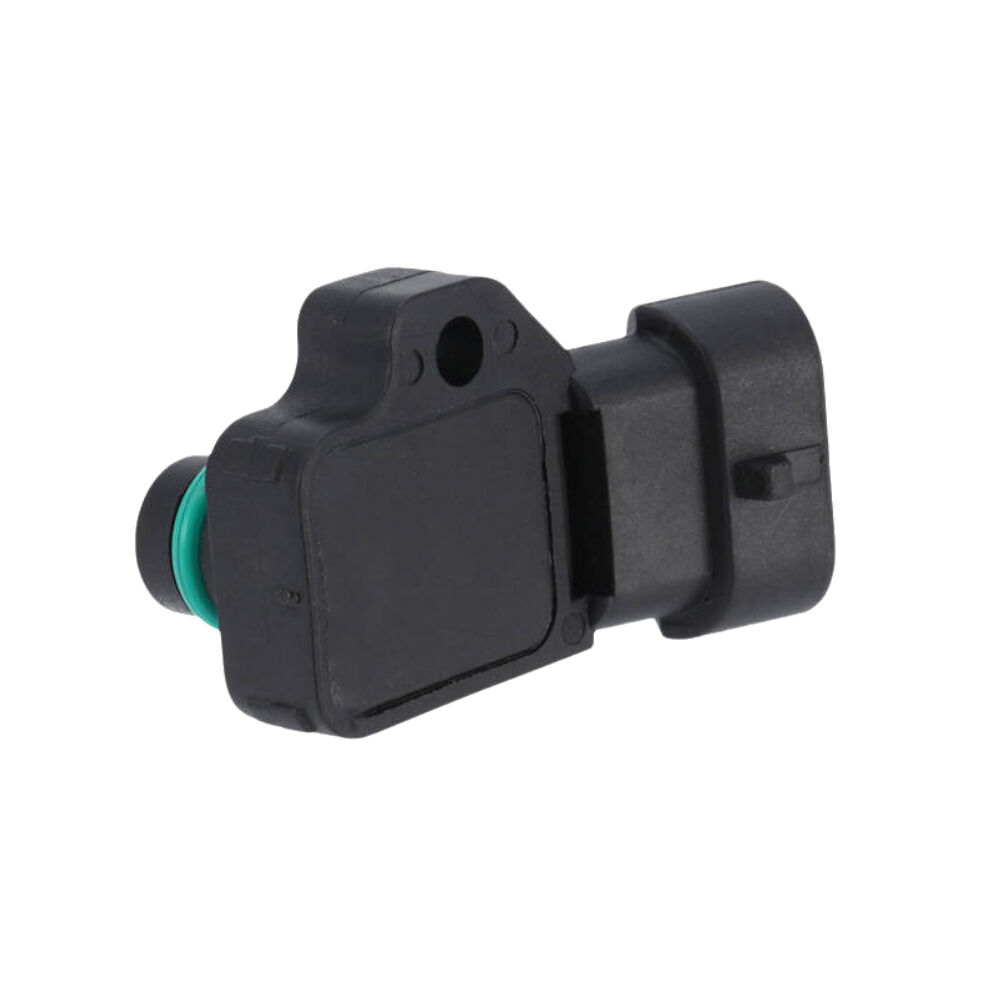
Modern internal combustion engines operate within precise parameters to deliver optimal performance, fuel efficiency, and emission compliance. At the heart of this precision lies a network of sensors continuously feeding data to the engine control unit, enabling real-time adjustments to combustion dynamics. Among these critical components, the manifold absolute pressure sensor stands as a fundamental piece of the fuel management puzzle, directly influencing how air and fuel are blended for combustion. Understanding why this sensor holds such importance reveals how contemporary engine systems achieve the delicate balance between power output, fuel economy, and environmental responsibility.
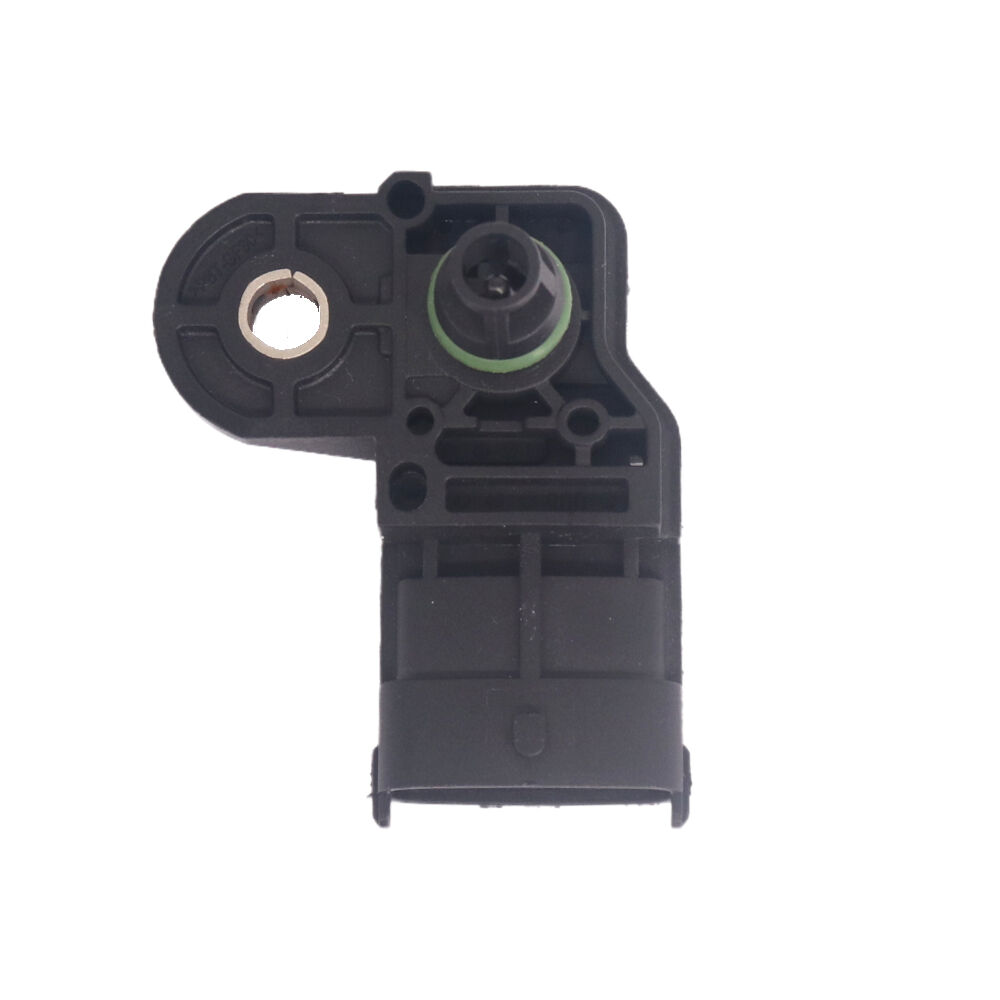
The relationship between air pressure measurement and fuel delivery control forms the foundation of efficient engine operation. Without accurate pressure readings from the intake manifold, the engine control module cannot determine the precise amount of air entering the combustion chambers, making it impossible to calculate the correct fuel quantity needed for stoichiometric combustion. This sensor essentially provides the engine computer with crucial atmospheric and intake pressure data, enabling intelligent fuel injection timing and duration decisions that directly affect combustion quality, throttle response, and overall engine behavior across varying operating conditions.
The Fundamental Role of Pressure Sensing in Fuel Calculation
How the MAP Sensor Measures Air Density
The manifold absolute pressure sensor operates by detecting the absolute pressure inside the intake manifold, which directly correlates to the mass of air entering the engine cylinders. Unlike gauge pressure sensors that measure relative to atmospheric pressure, the map sensor provides absolute pressure readings that remain consistent regardless of altitude or weather conditions. This measurement capability becomes essential because air density varies with atmospheric pressure, temperature, and humidity, all of which affect the actual oxygen mass available for combustion. By continuously monitoring intake manifold pressure, the sensor allows the engine control unit to calculate air mass flow with remarkable accuracy.
The physical sensing element within a map sensor typically consists of a silicon diaphragm that deflects in response to pressure changes, with this mechanical deflection converted into an electrical signal through piezoresistive or capacitive sensing technology. As engine load increases and the throttle opens wider, manifold pressure rises closer to atmospheric pressure, indicating greater air mass entering the cylinders. Conversely, during idle or deceleration with a closed throttle, manifold pressure drops significantly below atmospheric levels, signaling reduced air intake. These pressure variations provide real-time data about engine breathing dynamics that prove indispensable for precise fuel metering.
Converting Pressure Data Into Fuel Delivery Commands
Once the map sensor transmits pressure data to the engine control module, sophisticated algorithms immediately process this information alongside inputs from other sensors including intake air temperature, engine coolant temperature, throttle position, and oxygen sensors. The control unit uses volumetric efficiency tables stored in its memory, which represent how efficiently the engine draws air at different speeds and loads, to calculate the actual air mass entering each cylinder. With air mass determined, the system applies the target air-fuel ratio, typically around 14.7 parts air to one part fuel for gasoline engines under normal operating conditions, to calculate the precise fuel injection pulse width required.
This fuel calculation process occurs continuously at frequencies matching engine speed, with the map sensor enabling dynamic adjustments multiple times per second. During rapid acceleration, when manifold pressure rises quickly, the sensor data allows the control module to instantly increase fuel delivery to match the surging air intake, preventing lean conditions that could cause hesitation or engine damage. Similarly, during sudden deceleration, falling manifold pressure signals reduced air intake, prompting immediate fuel reduction to avoid rich mixtures that waste fuel and increase emissions. The responsiveness of this sensor-based control system fundamentally determines how smoothly and efficiently the engine responds to driver demands.
The Relationship Between Pressure Accuracy and Mixture Precision
The accuracy of pressure measurement directly translates into fuel mixture precision, with even small sensor errors causing noticeable performance issues or emission problems. A map sensor that reads slightly high will report greater air mass than actually entering the engine, causing the control module to deliver excessive fuel and create a rich mixture. This condition wastes fuel, increases hydrocarbon and carbon monoxide emissions, can foul spark plugs, and may damage catalytic converters over time. Conversely, a sensor reading low underestimates air mass, resulting in insufficient fuel delivery that creates lean conditions prone to poor performance, increased nitrogen oxide emissions, and potentially catastrophic engine damage from detonation or overheating.
Modern engine management systems demand pressure measurement accuracy within one to two percent across the entire operating range to maintain emissions compliance and optimal performance. The map sensor must deliver this precision across temperatures ranging from below freezing to well over one hundred degrees Celsius, while resisting contamination from oil vapors, fuel additives, and intake system deposits. Quality sensor designs incorporate temperature compensation circuitry and robust construction to maintain measurement stability throughout their service life, ensuring that fuel mixture control remains consistent as vehicles accumulate mileage and experience varying environmental conditions.
Why Air-Fuel Ratio Control Depends on Accurate Pressure Sensing
The Chemistry of Optimal Combustion Mixtures
Complete combustion of hydrocarbon fuels requires a specific ratio of oxygen molecules to fuel molecules, with gasoline engines theoretically needing approximately 14.7 pounds of air for every pound of fuel burned. This stoichiometric ratio represents the point where all fuel molecules find sufficient oxygen for complete oxidation, producing primarily carbon dioxide and water vapor while minimizing unburned hydrocarbons, carbon monoxide, and other pollutants. Achieving this precise ratio consistently across all operating conditions represents one of the primary challenges in engine management, requiring continuous monitoring and adjustment of fuel delivery based on real-time air intake measurements.
The map sensor enables this chemistry-based control by providing the foundational data needed to estimate air mass flow into the engine. Without accurate pressure sensing, the engine control unit would essentially operate blind to actual air intake conditions, forcing reliance on less precise speed-density calculations or fixed fuel maps that cannot adapt to changing atmospheric conditions, engine wear, or component variations. The sensor transforms the abstract concept of stoichiometric combustion into practical, achievable fuel delivery targets that the injection system can execute thousands of times per minute, ensuring that the chemical requirements for clean, efficient combustion are consistently met regardless of driving conditions.
Dynamic Mixture Adjustment Across Operating Conditions
Engine operating conditions vary dramatically from idle to wide-open throttle, from cold starts to fully warmed operation, and from sea level to high altitude driving. Each condition presents different air density characteristics and breathing efficiencies that affect the mass of air actually entering the cylinders. The map sensor provides the adaptive measurement capability that allows fuel delivery to track these variations accurately, ensuring appropriate mixtures whether the engine idles smoothly at 800 RPM or accelerates hard at 6000 RPM under full load. This dynamic adjustment capability distinguishes modern fuel injection systems from older carburetor designs that struggled to maintain optimal mixtures across such wide operating ranges.
Consider the challenge of altitude compensation, where atmospheric pressure decreases approximately one inch of mercury for every thousand feet of elevation gain. At high altitude, the same throttle opening and engine speed produce lower manifold absolute pressure because ambient pressure itself has decreased, meaning less air mass enters the cylinders. The map sensor automatically accounts for this condition by reporting the lower absolute pressure, allowing the control module to reduce fuel delivery proportionally without requiring any manual adjustments or mechanical changes. This seamless adaptation ensures optimal performance and emissions regardless of geographic location, demonstrating why pressure-based fuel control has become the standard approach in modern engine management.
Closed-Loop Control and Emission System Integration
While the map sensor provides the primary input for calculating baseline fuel delivery, modern engines operate in closed-loop control mode whenever possible, using oxygen sensor feedback to trim fuel delivery and maintain precise stoichiometric ratios. The pressure sensor establishes the starting point for these calculations, providing the open-loop fuel delivery estimate that gets refined through oxygen sensor corrections. Without accurate initial fuel delivery based on manifold pressure data, the closed-loop corrections would need to operate over excessively wide ranges, potentially exceeding the adaptation limits of the control system and triggering diagnostic trouble codes or emission failures.
Emission control systems including catalytic converters, evaporative emission controls, and exhaust gas recirculation all depend on consistent air-fuel ratios for proper operation. The three-way catalytic converter, which simultaneously reduces nitrogen oxides, carbon monoxide, and hydrocarbons, operates efficiently only within a narrow window around the stoichiometric ratio. Deviations of just a few percent in either direction dramatically reduce conversion efficiency, allowing pollutants to escape into the atmosphere. The map sensor enables the precise mixture control necessary to keep the converter operating within its optimal window, directly contributing to the vehicle meeting increasingly stringent emission standards while maintaining drivability and fuel economy expectations.
The Impact of Sensor Performance on Engine Behavior
Drivability Issues Related to Pressure Sensing Errors
When a map sensor begins providing inaccurate readings, drivers typically notice immediate effects on engine behavior and vehicle drivability. A sensor that gradually drifts out of calibration may cause subtle symptoms initially, such as slightly reduced fuel economy or minor hesitation during acceleration, which can easily be dismissed as normal vehicle aging. As sensor degradation progresses, symptoms become more pronounced, including rough idle, stalling when coming to a stop, poor throttle response, black smoke from the exhaust indicating rich operation, or pinging sounds suggesting lean conditions and detonation. These drivability problems stem directly from the control module receiving false pressure data and consequently delivering inappropriate fuel quantities for actual engine air intake.
Intermittent sensor failures present particularly challenging diagnostic scenarios because symptoms may appear only under specific conditions such as hot engine temperatures, high altitude, or rapid throttle changes. A map sensor with temperature-sensitive internal connections might provide accurate readings when cold but drift when heated, causing poor hot engine performance that mysteriously improves after the vehicle sits and cools. Similarly, a sensor with a contaminated sensing element might read correctly at low manifold pressures but provide false data at higher pressures under acceleration, resulting in hesitation or stumbling during power demands. Understanding these failure modes helps technicians diagnose the root cause of drivability complaints and recognize when pressure sensing accuracy has become compromised.
Fuel Economy Implications of Mixture Control Errors
Fuel economy represents one of the most sensitive indicators of proper air-fuel mixture control, with even small deviations from optimal ratios causing measurable increases in fuel consumption. A map sensor reading slightly high consistently delivers richer mixtures than necessary, wasting fuel with every combustion cycle and potentially reducing fuel economy by ten to fifteen percent over thousands of miles of operation. This excess fuel not only costs money at the pump but also increases carbon dioxide emissions proportionally, contributing to the vehicle's environmental impact. Conversely, a sensor reading low creates lean conditions that might seem to improve fuel economy initially but often triggers the control module to enrich the mixture through closed-loop corrections once oxygen sensors detect the lean condition, ultimately providing no real economy benefit.
The relationship between manifold pressure sensing and fuel economy extends beyond simple mixture ratios to include factors like combustion efficiency, engine knock control, and transmission shift strategies. Optimal combustion timing depends partly on mixture strength, with the engine control module advancing or retarding ignition timing based partly on calculated air-fuel ratios derived from sensor data. Inaccurate pressure readings can lead to conservative timing strategies that sacrifice efficiency for safety, reducing power output and requiring heavier throttle application to achieve desired acceleration. Additionally, many modern transmissions use engine load calculations based on manifold pressure to determine optimal shift points, meaning sensor errors can trigger premature or delayed shifts that further compromise fuel economy through suboptimal powertrain operation.
Long-Term Engine Durability Considerations
Beyond immediate drivability and fuel economy concerns, prolonged operation with inaccurate map sensor data can cause cumulative damage that shortens engine service life. Consistently rich mixtures resulting from sensor over-reading wash lubricating oil from cylinder walls, dilute crankcase oil with unburned fuel, and deposit carbon throughout the combustion chambers, intake valves, and exhaust system. These deposits gradually reduce engine efficiency, increase compression ratios unpredictably potentially causing detonation, and eventually necessitate expensive cleaning services or component replacement. The catalytic converter faces particular risk from rich operation, as unburned fuel entering the exhaust can ignite within the converter substrate, generating extreme temperatures that melt the catalyst material and destroy emission control capability.
Lean operation caused by a map sensor reading below actual pressure presents even more immediate durability threats, as insufficient fuel delivery creates high combustion temperatures that can quickly damage pistons, valves, and cylinder heads. Detonation, where the air-fuel mixture ignites spontaneously before the spark plug fires, generates shock waves that hammer internal engine components and can destroy piston ring lands, crack pistons, or blow head gaskets within minutes of severe occurrence. While modern knock sensors provide some protection against detonation, they cannot fully compensate for fundamentally lean mixtures caused by incorrect pressure sensing. Maintaining map sensor accuracy throughout vehicle service life thus becomes essential not just for performance and efficiency but for protecting the substantial investment represented by the engine itself.
Sensor Technology and Fuel System Integration Architecture
Comparing Speed-Density and Mass Airflow Sensing Approaches
Engine management systems employ two primary methods for determining air mass entering the engine: speed-density calculation using a map sensor and direct measurement using a mass airflow sensor. The speed-density approach uses manifold absolute pressure along with engine RPM, intake air temperature, and volumetric efficiency tables to calculate air mass indirectly, offering a robust and relatively inexpensive solution that works well across wide operating ranges. This method relies heavily on accurate pressure sensing and well-calibrated volumetric efficiency models that account for how efficiently the engine draws air at various speeds and loads. Many performance enthusiasts prefer speed-density systems because they eliminate the airflow restriction of a mass airflow sensor and prove less sensitive to intake modifications.
Mass airflow sensing systems directly measure air mass using a heated element or film whose cooling rate indicates mass flow, theoretically providing more accurate air measurement without requiring volumetric efficiency assumptions. However, these sensors add cost and complexity while introducing a slight airflow restriction in the intake path. Some modern engines employ both sensor types simultaneously, using the map sensor for rapid transient response and the mass airflow sensor for steady-state accuracy, combining the strengths of both approaches. Understanding that the manifold pressure sensor serves as the primary air measurement device in speed-density systems or as a secondary verification input in mass airflow systems clarifies its importance regardless of overall system architecture.
Integration With Other Engine Sensors and Controls
The map sensor functions as part of a comprehensive sensor network that collectively enables sophisticated engine management. The intake air temperature sensor works closely with the pressure sensor because air density depends on both pressure and temperature according to the ideal gas law, with the control module using both inputs to calculate precise air mass. Throttle position sensors provide rate-of-change information that helps the control module anticipate pressure changes and implement acceleration enrichment or deceleration fuel cutoff strategies. Engine coolant temperature sensors influence fuel delivery calculations by signaling when enrichment is needed for cold starting or when the engine has reached optimal operating temperature for stoichiometric control.
Oxygen sensors downstream of the combustion process complete the control loop by verifying whether calculated fuel delivery achieved the intended air-fuel ratio, allowing the control module to trim the base calculations provided by the map sensor and other inputs. Knock sensors protect against detonation that might occur if lean mixtures or timing errors arise from sensor inaccuracies, while camshaft and crankshaft position sensors provide the precise timing reference needed to synchronize fuel injection events with valve opening and piston position. This sensor integration creates a self-correcting system where the manifold pressure sensor provides foundational data that gets refined and verified through multiple feedback mechanisms, ensuring robust fuel control even when individual sensor readings drift slightly over time.
Diagnostic Capabilities and Failure Detection Methods
Modern engine control modules continuously monitor map sensor outputs for rationality, comparing reported pressure values against expected ranges based on engine speed, throttle position, and other sensor inputs. When sensor readings fall outside plausible ranges or change too quickly or slowly compared to throttle movement, the control module stores diagnostic trouble codes and may illuminate the check engine light to alert the driver. Some systems can detect sensor performance degradation before complete failure by tracking the magnitude of closed-loop fuel corrections needed to maintain stoichiometric ratios, with excessive corrections suggesting that initial fuel calculations based on pressure data are consistently inaccurate.
Advanced diagnostic procedures performed by technicians include comparing map sensor readings to known atmospheric pressure when the engine is not running, verifying that the sensor reports expected pressure changes when vacuum is applied manually, and monitoring sensor voltage or frequency outputs while driving under various load conditions. Scan tools can display live sensor data alongside calculated parameters like volumetric efficiency and fuel trim values, allowing experienced diagnosticians to identify subtle sensor issues that might not trigger fault codes but still affect performance. The comprehensive diagnostic capabilities surrounding map sensor operation reflect its critical importance in engine management, with manufacturers investing substantially in failure detection methods to prevent undetected sensor problems from causing performance issues or emission failures.
FAQ
What symptoms indicate a failing MAP sensor affecting fuel mixture?
Common symptoms of a failing map sensor include rough or unstable idle, hesitation during acceleration, reduced fuel economy, black exhaust smoke indicating rich operation, pinging or detonation sounds suggesting lean conditions, and illumination of the check engine light with associated diagnostic codes. Drivers may notice the engine runs poorly when cold or hot specifically, experiences flat spots during acceleration, or fails emission tests due to incorrect air-fuel ratios that increase pollutant production beyond acceptable limits.
Can a vehicle run without a functioning MAP sensor?
Most modern vehicles cannot run properly without a functioning map sensor if the engine management system relies on speed-density fuel calculation. When the sensor fails completely, the engine control module typically enters a default operating mode using fixed fuel delivery values and reduced power output, allowing the vehicle to be driven at reduced performance to reach a repair facility. However, this limp-home mode provides only basic functionality with poor fuel economy, limited power, and no ability to adapt to changing conditions, making continued operation inadvisable beyond reaching immediate service.
How does altitude affect MAP sensor readings and fuel control?
Altitude directly affects manifold absolute pressure because atmospheric pressure decreases with elevation, meaning less air mass enters the engine at higher altitudes for the same throttle opening and engine speed. The map sensor automatically compensates for altitude by reporting lower absolute pressure values at elevation, allowing the engine control module to reduce fuel delivery proportionally without manual adjustment. This automatic altitude compensation ensures optimal air-fuel ratios whether driving at sea level or in mountainous regions, maintaining performance and emissions compliance across geographic variations.
What maintenance does a MAP sensor require during vehicle service life?
The map sensor itself typically requires no routine maintenance under normal operating conditions, as the sensing element is sealed and designed for the vehicle's service life. However, keeping the intake system clean and ensuring vacuum hoses connecting the sensor to the intake manifold remain free from cracks, restrictions, or oil contamination helps maintain accurate pressure sensing. During major engine service intervals, technicians should verify sensor connector integrity, check for diagnostic codes related to pressure sensing, and confirm that sensor readings match expected values compared to atmospheric pressure and engine operating conditions to detect degradation before complete failure occurs.